Mesh Fencing for Construction Sites: Compliance Guide
This guide explains what typically drives mesh fencing compliance on construction sites and how teams can choose, install, and maintain fencing that stands up to inspections.
What does “compliance” mean for mesh fencing on construction sites?
Mesh fencing compliance means the site’s boundary controls match the risks and the rules that apply to that specific project. In practice, inspectors assess whether mesh fencing effectively restricts unauthorised access, remains stable in expected wind and site conditions, provides safe separation from pedestrians and traffic, and displays clear warning signage.
Because regulations vary by jurisdiction and project type, mesh fencing is typically treated as one component of a broader site security and public protection plan.
Which regulations and standards usually apply?
Most projects are governed by a mix of workplace safety law, construction regulations, local authority requirements, and contract specifications. The most reliable way to confirm requirements is to check the project’s health and safety plan, method statements, and any local permitting conditions.
If a project sits near public roads, schools, or high-footfall areas, additional local conditions often apply, especially for pedestrian management and out-of-hours security.
When is mesh fencing required, and when is it not enough?
Mesh fencing is commonly required whenever a site needs a defined perimeter to prevent unauthorised entry. It is also used to separate the public from moving plant, excavations, materials storage, and temporary works.
It may not be enough where there is a high risk of falling objects, a need for full visual screening, a requirement for higher anti-climb performance, or exposure to strong winds. In those cases, they may need solid hoarding, debris netting solutions, increased height, or secondary controls.
What height and perimeter design expectations do inspectors typically look for?
Inspectors typically expect a continuous perimeter with minimal gaps, a consistent height appropriate to the risk, and protection at vulnerable points like corners, gates, and changes in level. They also look for fences that cannot be easily pushed over, lifted off feet, or bypassed through incomplete lines.
Where the public is close, they often expect the perimeter to be designed so people are guided safely, rather than tempted to shortcut through the site boundary.
How should they choose the right mesh fence type?
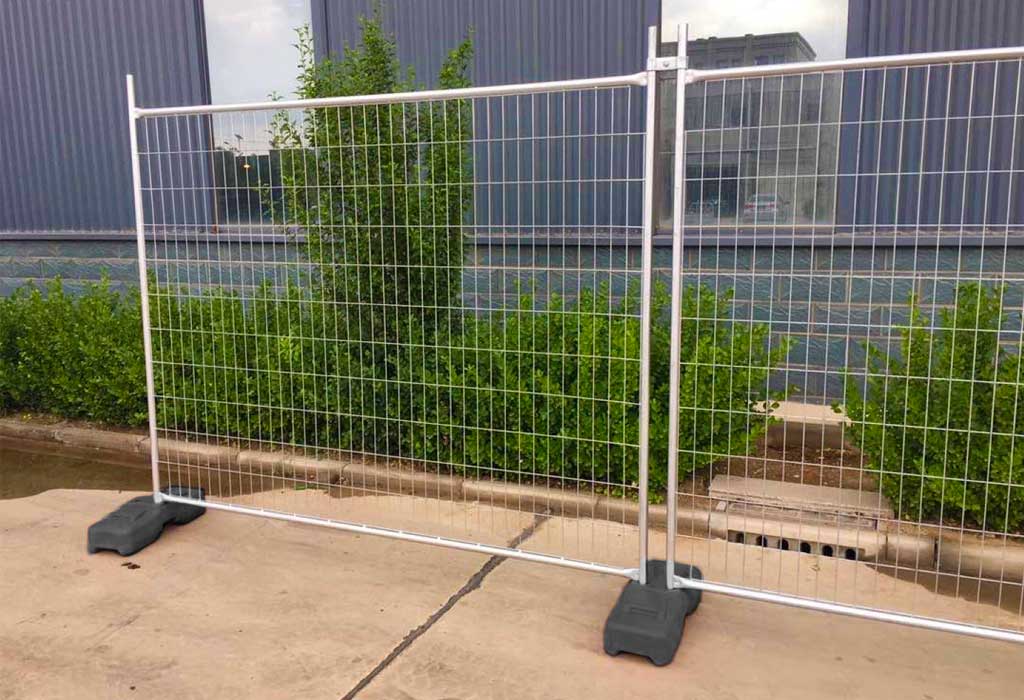
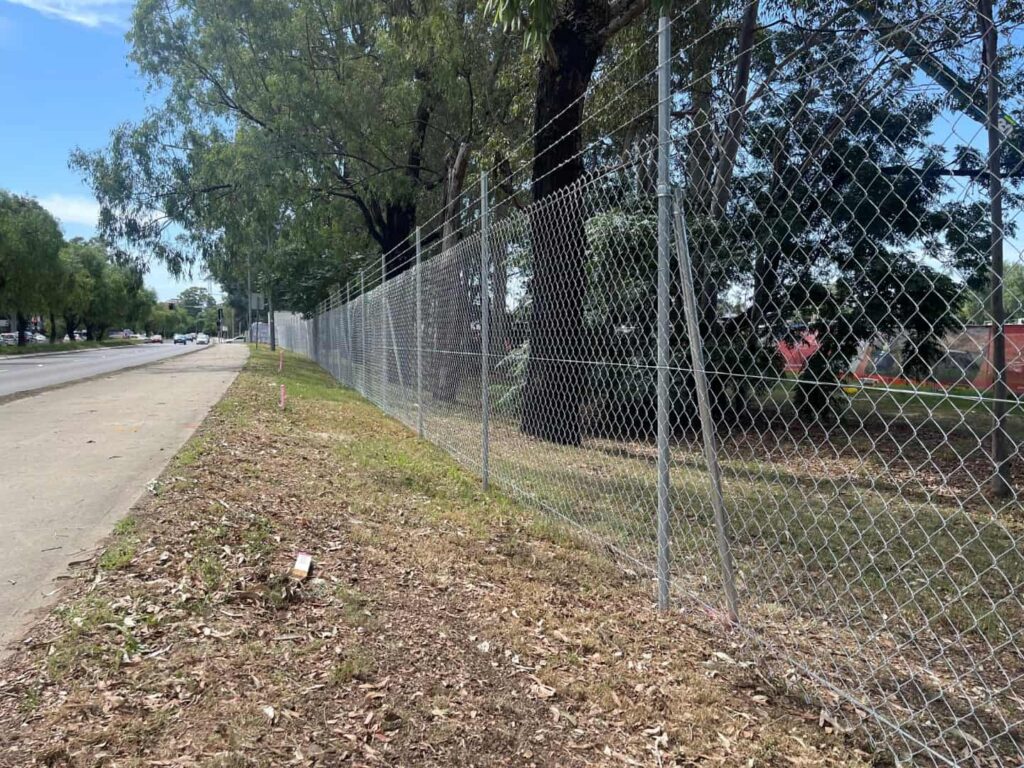
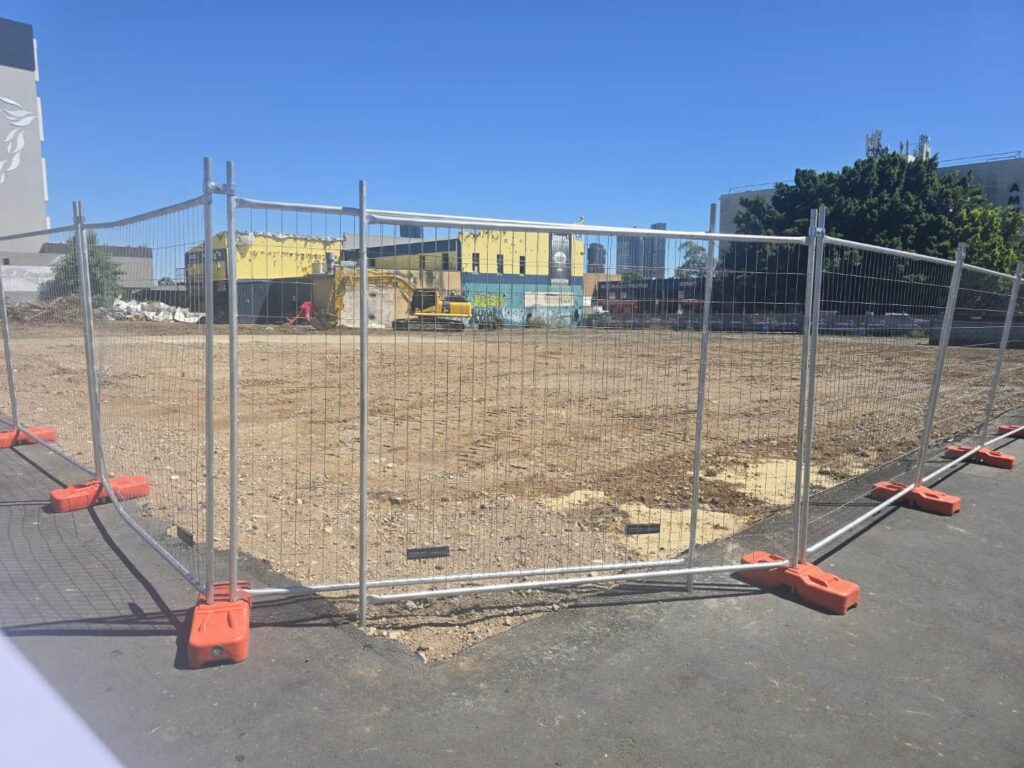
They should select fencing based on risk, environment, and expected duration. Temporary welded mesh panels are common for short-to-medium projects because they are quick to deploy and relocate. Chain-link systems can suit longer durations but usually need more robust posts and tensioning.
They should also check whether the specification calls for anti-climb mesh, tighter apertures, or specific coatings where corrosion is likely.
What stability, ballast, and wind considerations matter for compliance?
Stability is a frequent failure point in site inspections. Panels should have suitable feet, ballast, and connections for the site conditions, especially in exposed areas or where sheeting and signage increase wind load.
They should not assume one ballast approach fits every site. Uneven ground, soft verges, and narrow pavements change the risk. A simple rule is that anything that can topple onto the public or into traffic needs extra attention, even if it “usually holds.”
How should gates and access points be managed to stay compliant?
Gates are often the weakest link, so they should be treated as controlled access points, not just openings in the fence line. Inspectors typically want gates that are lockable, wide enough for intended vehicle movements, and positioned to avoid forcing reversing into public areas.
They should also manage gate operation: who has keys, when gates are open, and how pedestrians are separated from vehicles. Poor gate control can undermine an otherwise compliant fence line.
What signage is usually expected on mesh fencing?
Signage expectations depend on local rules, but inspectors generally expect clear warnings and contact information. They often look for signs that communicate “no unauthorised entry,” key hazards, and emergency contacts, placed where they can actually be seen.
If the public routes near the fence, additional wayfinding and pedestrian guidance signs may be needed so people are not funnelled into conflict with vehicles or site operations.
How do they protect pedestrians and the public around the fence line?
They should treat the outside of the fence as part of the safety problem. If pedestrians pass close by, teams typically need adequate walkway width, barriers or cones to create separation, and visible delineation at night.
They should also avoid sharp edges, protruding ties, and trip hazards from feet and ballast. Where visibility is poor, reflective elements and lighting controls are commonly expected.
What inspection and maintenance routine helps them pass audits?
They should inspect fencing regularly and after events that change conditions, such as storms, deliveries, plant strikes, or groundworks near the line. A simple documented checklist helps: continuity, stability, feet and ballast, couplers, damage, gate function, and signage.
If they log defects and close them out quickly, they can demonstrate active management, which is often as important as the physical fence itself.
What are the most common compliance failures with mesh fencing?
The most common failures are gaps at the bottom or ends, missing couplers, inadequate ballast, leaning panels, unsecured gates, and poor interface with public walkways. Another frequent issue is adding privacy sheeting without reassessing wind load, which can turn a stable fence into a hazard.
They also fail compliance when fencing drifts from the approved plan, such as shifting the line to suit deliveries without updating pedestrian routes and signage.
How can they document mesh fencing decisions for compliance?
They should keep records that show the fence was selected and installed based on risk. Useful documents include the site logistics plan, risk assessments, method statements for installation, inspection logs, photos of key areas, and any local authority permits.
If an incident occurs or an inspector asks why a fence type was chosen, documentation helps show it was a deliberate control, not an afterthought.
What is a practical compliance checklist they can use before an inspection?
They can use a quick pre-inspection check to catch most issues:
- Is the perimeter continuous with no easy bypass points?
- Are panels upright, coupled, and stable with appropriate ballast?
- Are feet and ballast positioned to avoid trips and obstruction?
- Are gates lockable, controlled, and safely located for vehicles and pedestrians?
- Is signage present, legible, and placed at key approaches?
- Are pedestrian routes safe, separated, and usable at night?
- Are inspections logged, and are defects closed out promptly?
Mesh fencing compliance is rarely about one “perfect” product. It is about whether the fence, the layout, and the daily management together reduce risk in a way the rules expect.
FAQs (Frequently Asked Questions)
What does compliance mean for mesh fencing on construction sites?
Compliance means that the site’s boundary controls, including mesh fencing, effectively match the risks and rules applicable to the project. Inspectors look for restricted unauthorised access, fence stability under expected conditions, safe interfaces with pedestrians and traffic, and clear warning signage. Compliance varies by jurisdiction and project type, so mesh fencing is typically part of a broader site security and public protection plan.
Which regulations and standards typically apply to mesh fencing on construction sites?
Mesh fencing on construction sites is governed by a combination of workplace safety laws, construction regulations, local authority requirements, and contract specifications. To confirm exact requirements, teams should consult the project’s health and safety plan, method statements, and any local permitting conditions. Sites near public roads, schools, or high-footfall areas may also have additional local mandates for pedestrian management and out-of-hours security.
When is mesh fencing required on construction sites, and when might it be insufficient?
Mesh fencing is commonly required to define site perimeters preventing unauthorised entry and to separate the public from hazards like moving plant, excavations, material storage, or temporary works. However, it may be insufficient where there’s a high risk of falling objects, need for full visual screening, higher anti-climb performance requirements, or exposure to strong winds. In such cases, solid hoarding, debris netting solutions, increased fence height, or secondary controls are necessary.
What height and perimeter design features do inspectors expect for compliant mesh fencing?
Inspectors expect a continuous perimeter fence with minimal gaps and consistent height appropriate to the site’s risk profile. Vulnerable points such as corners, gates, and level changes must be well protected. Fences should resist being pushed over or lifted off their feet and avoid incomplete lines that allow bypassing. Where the public is nearby, fences should guide pedestrian movement safely to prevent shortcuts through the site boundary.You may also visit https://airdriepaintanddecor.com/scaffolding-mesh-5-benefits-for-site-safety-and-debris-control/ to learn more about : Scaffolding Mesh: 5 Benefits for Site Safety and Debris Control.
How should teams choose the right type of mesh fence for their construction site?
Fence selection should be based on risk assessment, environmental conditions, and project duration. Temporary welded mesh panels suit short-to-medium projects due to ease of deployment and relocation. Chain-link fences are better for longer durations but require more robust posts and tensioning systems. Teams should also consider specifications for anti-climb mesh, tighter apertures for security needs, or corrosion-resistant coatings in harsh environments.
What inspection and maintenance routines help ensure mesh fencing passes audits?
Regular inspections are essential—especially after events like storms or groundworks—to check fence continuity, stability of feet and ballast, condition of couplers, damage levels, gate functionality, and signage visibility. Maintaining a documented checklist aids in tracking these elements. Promptly logging defects and addressing them demonstrates active management of fencing compliance which is often as important as the physical fence itself.