f14 grade plywood

What to Specify When Ordering F14 Grade Plywood

Text: “Ordering structural plywood sounds simple until someone asks, “Yep, but what exactly do you want?” That is where projects can wobble. A clean purchase order avoids delays, wrong sheets on site, and the classic issue of plywood that is close, but not actually compliant.

This guide breaks down what to specify when ordering F14 grade plywood in Australia, so the supplier, builder, and engineer are all talking about the same thing.

What does “F14” actually mean for a plywood order?

It means the plywood has a stress grade of F14, typically used for structural applications where known strength and stiffness are required. They should treat it as an engineering grade, not a decorative label.

When ordering F14 grade plywood, they should assume the sheet is being selected to meet structural design needs and compliance expectations under Australian practice.

Is the plywood intended to be structural, bracing, or general use?

They should state the end use in plain terms, because it influences the correct product selection. “Structural flooring,” “wall bracing,” or “roof diaphragm” tells a supplier more than just a thickness.

If they only write F14 grade plywood with no application, they may receive a product that is technically F14 but not optimised for the job, or missing required markings for approval.

Which Australian Standard and compliance markings should be requested?

They should specify that the sheets must be manufactured and marked for Australian compliance, commonly referencing AS/NZS 2269 for structural plywood. On delivery, they should expect legible branding, grade stamps, and identification marks.

For F14 grade plywood, they should ask the supplier to confirm the sheets are structural-rated and appropriately stamped so a certifier or engineer can verify it on site. “

What thickness should be nominated, and how precise should it be?

They should nominate the exact thickness in millimetres, not “standard sheet” or “flooring ply.” Common structural thicknesses in Australia include 12 mm, 15 mm, 17 mm, 18 mm, and 21 mm, but the project documentation should drive it.

When they order F14 grade plywood, they should match thickness to engineering drawings and span tables, because “one size up” can change levels, fixings, and load behaviour.

What sheet size and quantity details avoid confusion?

They should state sheet dimensions (for example, 2400 x 1200) and the exact quantity of sheets, not just square metres. If cutting optimisation matters, they should also mention whether half-sheets or custom sizing is acceptable.

With F14 grade plywood, clear sizes matter because suppliers may stock multiple formats, and substitutions can create waste, extra joins, or bracing patterns that no longer line up.

Should they specify face grade, appearance level, or sanding?

Yes, if the face will be visible or needs paint. Structural plywood can arrive with a range of face qualities, and “structural” does not automatically mean “pretty.”

If F14 grade plywood is going under floor coverings or behind linings, appearance may not matter. If it is exposed in a garage, shed, or commercial fitout, they should request a suitable face grade and whether sanded faces are required.

Does the bond type and durability rating need to be included?

They should nominate the bond classification and intended exposure conditions, because moisture risk drives the correct adhesive and durability choice. In Australia, external or wet-area exposure typically needs a higher durability specification than internal dry use.

When ordering F14 grade plywood, they should say if it is for internal dry, external above-ground, or wet-area use, rather than assuming the supplier will guess correctly.

Is the product hardwood, softwood, or species-specific, and does it matter?

It can matter for weight, fastening behaviour, and sometimes availability. Some projects also specify plantation sources or particular performance expectations that vary by construction type.

If their engineer or drawings call up a certain type, they should include it. If not, they can still ask what the supplier is proposing for F14 grade plywood so they can confirm it aligns with project assumptions.

See Also : What to Specify When Ordering Formwork Plywood

What edge profile and tongue-and-groove details should be stated?

If the sheets are for flooring, they should state whether they require square edge or tongue-and-groove (T&G). T&G affects installation speed, squeaks, and joint support requirements.

For F14 grade plywood flooring orders, they should also confirm which edges are machined, and whether the sheet layout assumes long-edge T&G, four-side T&G, or square edges with blocking.

Should they specify treatment, termite risk, or bushfire considerations?

If the build is in a termite-prone region, they should follow the project’s termite management plan rather than rely on guesswork. Plywood treatment is not a universal default, and some sites rely on physical barriers instead.

For F14 grade plywood, they should also consider local council or insurer expectations in bushfire-prone areas, and confirm the broader system requirements with the designer, because plywood is only one part of compliance. Check out more about Bushfire.

What moisture condition and storage expectations should be included?

They should ask for delivery wrapped and protected, and they should plan for flat storage off the ground on site. Plywood can move with moisture changes, and even a good product can arrive and then be damaged by poor handling.

If F14 grade plywood is going straight into flooring or bracing, they should also coordinate delivery timing so the sheets are not sitting in weather for days, swelling at edges or delaminating from site exposure.

What fixing and installation constraints should they confirm before ordering?

They should cross-check nail or screw type, spacing, and any adhesive requirements against the engineer’s details and relevant Australian guidance. Some bracing and diaphragm designs rely on very specific fastener patterns.

Ordering F14 grade plywood without confirming installation details can lead to a scenario where the right material arrives, but it cannot be installed as designed because the crew lacks the specified fasteners or the correct sheet orientation plan.

What documentation should they request from the supplier?

They should request a spec sheet, compliance confirmation, and any chain of custody or sustainability documentation if the project requires it. For commercial jobs, this can save time during inspections and handover.

For F14 grade plywood, they should also ask the supplier to confirm batch consistency and availability, especially if staged deliveries are planned and they want the same product profile throughout.
f14 grade plywood

What delivery details prevent the most common site headaches?

They should specify delivery address, unloading requirements, preferred time windows, and whether a forklift or crane is available. If access is tight, they should warn the supplier so the lorry size can be matched to the street and site entry.

When F14 grade plywood is delivered incorrectly, it is usually not the sheet that causes the problem; it is the logistics. A few lines in the order can prevent re-delivery costs and programme blowouts.

What should a simple purchase order line look like?

They should write it so there is no room for interpretation. A practical line includes: product, stress grade, standard, thickness, sheet size, edge profile, bond/exposure, quantity, and delivery instructions.

Example wording could be: “Structural plywood, F14 grade plywood, AS/NZS 2269, 17 mm, 2400 x 1200, T&G long edges, suitable for internal flooring, qty 60 sheets, deliver wrapped to site in Parramatta NSW.”

How can they double-check they are ordering the right plywood for Australia?

They should compare the order against the engineer’s drawings, the building approval documents, and what the installer expects on site. If anything is vague, they should ask the supplier to confirm in writing before payment.

If they do that, F14 grade plywood becomes a straightforward procurement item, not a surprise. And the build keeps moving, which is the whole point.

FAQs (Frequently Asked Questions)

What does ‘F14 grade plywood’ mean in structural applications?

F14 grade plywood refers to a stress grade indicating the plywood is engineered for structural use, offering known strength and stiffness. It should be treated as an engineering-grade material intended to meet specific design needs and compliance under Australian standards.

Why is it important to specify the intended use when ordering F14 grade plywood?

Specifying whether the plywood is for structural flooring, wall bracing, or roof diaphragm helps suppliers provide a product optimised for the job. Without clear application details, you might receive technically compliant F14 plywood that lacks necessary features or markings for your specific use.

Which Australian standards and compliance markings should be requested for F14 grade plywood?

You should request plywood manufactured and marked according to AS/NZS 2269 for structural plywood. Expect legible branding, grade stamps, and identification marks on delivery so certifiers or engineers can verify compliance onsite.

How precise should thickness and sheet size specifications be when ordering F14 grade plywood?

Thickness should be nominated exactly in millimetres (e.g., 12 mm, 15 mm, 18 mm), matching engineering drawings and span tables to ensure proper load behaviour. Sheet dimensions (like 2400 x 1200 mm) and exact quantities must also be specified to avoid substitutions that create waste or misalignments.

Should face grade, bond type, and durability ratings be included in the order?

Yes. If the plywood face will be visible or painted, specify the desired face grade and sanding requirements. Additionally, indicate bond classification and exposure conditions (internal dry, external above-ground, wet-area) since moisture risk affects adhesive choice and durability standards.

What installation and storage considerations are important when ordering F14 grade plywood?

Confirm fixing types, spacing, and adhesive needs per engineer’s guidance before ordering. Also plan for wrapped delivery with flat storage off the ground to prevent moisture damage. Coordinate timing so sheets aren’t exposed to weather on-site, avoiding swelling or delamination.
formwork plywood

What to Specify When Ordering Formwork Plywood

Ordering formwork plywood sounds simple until it is not. One wrong assumption and they end up with sheets that swell, delaminate, or fail early, right when the pour schedule is tight and labour is expensive.

This guide is written for Australian projects. It breaks down what to specify so suppliers can quote accurately, and site teams get the panel performance they actually need.

What is the project actually pouring, and why does it change the plywood spec?

The concrete finish, pressure, and cycle speed decide what formwork plywood should be used. A high-rise core, a small slab edge, and a bridge pier do not punish panels in the same way.

They should start by stating the formwork system and the concrete element. Walls and columns usually demand higher face quality and better edge sealing. Suspended slabs often need stiffness and consistent thickness across many sheets.

What sheet size and thickness should they specify upfront?

They should nominate sheet dimensions and thickness in the first line of the enquiry. It affects structural performance, handling, crane lifts, and waste.

In Australia, common sizes include 2400 x 1200 mm, but some suppliers offer other formats. Thickness is often selected to match bearer spacing and design loads. If they are unsure, they should ask the formwork designer to confirm the required thickness for the spans.

What load rating or structural standard should they ask for?

They should ask what the panel is made and tested to, not just what it is called. For structural confidence, the supplier should state the relevant compliance and grading.

In Australia, they may reference AS or EN style grading depending on the product line, but the key is traceable documentation. If a cert or test report cannot be provided, they should treat it as a risk, especially for repeat-use formwork plywood on commercial sites.

What face grade and concrete finish level do they need?

They should specify the finish expectation in plain terms: off-form architectural, paint-grade, or standard construction finish. Then match the face grade to it.

Higher face quality usually costs more, but it reduces patching and remedial work. If they need a clean fair-face outcome, they should insist on consistent veneer quality and a film face designed for concrete contact. That is where formwork plywood choices really show on the finished wall.

Should they request film faced, plastic coated, or raw faces?

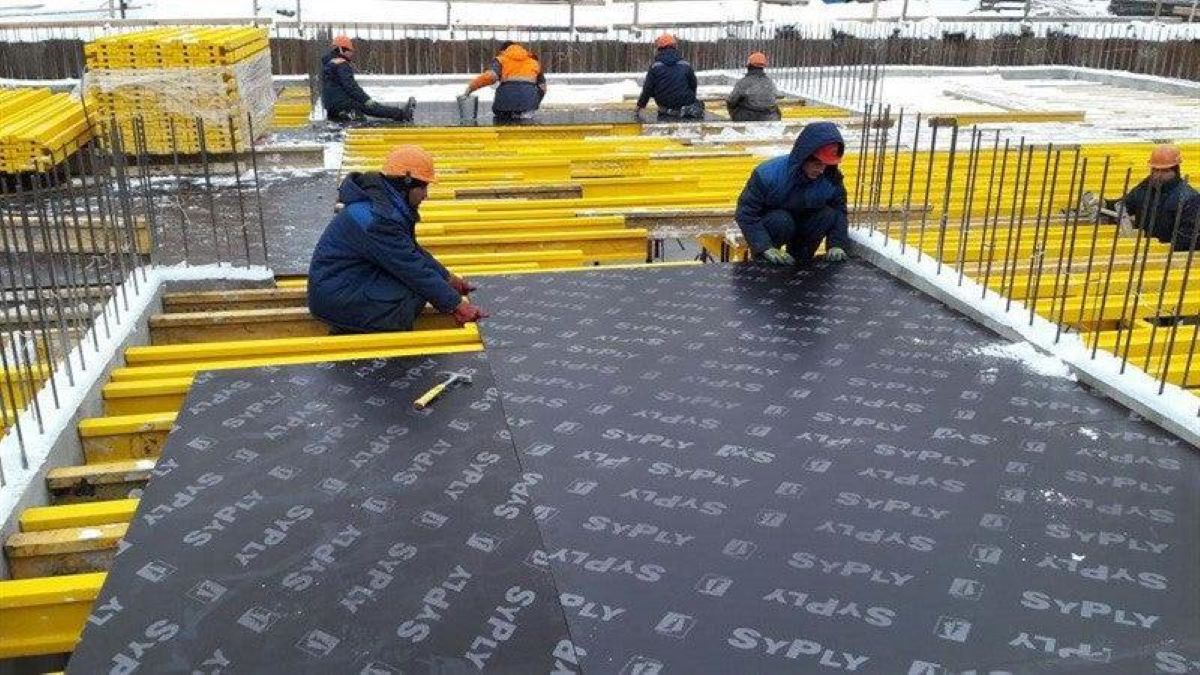
They should request the face type that suits the number of pours and the release method. Film faced is common because it gives a smooth surface and protects the veneer.

Plastic coated or proprietary overlays can extend life, but only if edges are sealed and handling is good. Raw faces are typically false economy for concrete work. For most Australian commercial jobs, film faced formwork plywood is the starting point unless the design calls for something specialised.

How should they specify edge sealing and edge treatment?

They should specify factory edge sealing as mandatory, and ask what sealant is used. Edges are where water gets in first, and swelling starts there.

They should also specify whether they need tongue and groove, square edge, or machined edges. For wet weather pours in places like Sydney, Brisbane, or Melbourne winters, good edge protection can matter more than another step up in face grade for formwork plywood.

What glue bond and moisture resistance details should be included?

They should ask for the glue bond rating and what “exterior” actually means for the product. Not all exterior-labelled panels behave the same once repeatedly wetted, dried, and stressed.

They should request confirmation that the bond is suitable for concrete formwork exposure. If the supplier can state the adhesive type or performance class, even better. On Australian coastal projects, moisture cycling is brutal, and formwork plywood needs to cope with it.

How many reuses are they expecting, realistically?

They should state their target number of reuses, because it drives value. A panel that lasts 5 pours is priced differently to one expected to last 30.

They should be honest about site conditions and handling. If they know labourers will cut sheets often, drag them, or store them uncovered, they should not overpay for premium panels they cannot protect. The best formwork plywood is the one whose lifespan matches the job’s discipline.

What tolerances and thickness consistency should they ask the supplier to confirm?

They should ask for thickness tolerance and flatness expectations. Small variation across sheets can create lipping, grout loss, and finishing issues.

They should also ask if the supplier can provide batch consistency. For big projects in Perth or major infrastructure works in regional NSW, mixed batches from different mills can behave differently. Good formwork plywood supply is as much about consistency as it is about peak performance.

See Also : Where Formply Is Used, and Where It Is Not

Should they specify compatibility with release agents and coatings?

They should confirm which release agents will be used and ask if the panel face is compatible. Some overlays dislike certain oils or require water-based agents.

They should also specify whether they plan to paint edges on site or apply additional sealers. If they are using aggressive chemical release products, they should validate the overlay durability first. This avoids blaming formwork plywood for a chemical mismatch.

What delivery, packaging, and storage requirements should be written into the order?

They should specify how the packs arrive and how they are protected. Water damage often occurs before the sheets even reach the deck.

They should ask for packs to be strapped, wrapped, and clearly labelled with batch details. They should also state if the site needs tailgate unload, craneable packs, or timed deliveries. In Australian summer storms, uncovered packs are a quick way to ruin formwork plywood before first use.

What documentation should they ask for to protect themselves?

They should ask for product datasheets, compliance statements, and any test reports before purchase. It is easier to resolve disputes when the spec is written and traceable.

They should also request guidance on handling, sealing cut edges, and recommended fasteners. If they are working under a principal contractor QA system, those documents matter. With formwork plywood, paperwork is not just admin, it is risk control.

How should they write the spec line so a supplier can quote without guessing?

They should write a short, complete specification that includes size, thickness, face, edge sealing, and performance expectation. If it is vague, the supplier will fill the gaps with the cheapest assumption.

A practical example for an Australian order could read like this: “Supply film faced formwork plywood, 2400 x 1200, 17 mm, factory edge sealed all sides, suitable for minimum 15 reuses on wall forms, consistent thickness tolerance, provide datasheet and compliance documentation, deliver wrapped craneable packs to site in Parramatta NSW.”

formwork plywood

What are the common mistakes people in Australia make when ordering?

They often specify only “formply” and a thickness, then get surprised by early failure. They also forget to specify edge sealing, expected reuses, or finish requirements.

Another common issue is assuming all formwork plywood is the same across suppliers. It is not. Mill source, overlay quality, glue bond, and storage history all change how panels behave. Clear specs and clear expectations prevent most of the arguments later.

What should they confirm before they sign off on the first delivery?

They should inspect the first packs immediately and compare them to the order. Look for edge sealing coverage, face damage, swelling, consistent markings, and sheet flatness.

They should record batch numbers and take photos if anything looks off. If they are rolling out the product across multiple sites in Australia, this first inspection sets the tone with the supplier. Catching issues early protects the whole formwork plywood package, not just one pour.

FAQs (Frequently Asked Questions)

What factors determine the appropriate formwork plywood specification for an Australian construction project?

The type of concrete element being poured (such as high-rise cores, slab edges, or bridge piers), the required concrete finish, pressure during pouring, and cycle speed all influence the formwork plywood specification. Different elements demand varying face quality, edge sealing, stiffness, and thickness to ensure panel performance aligns with project needs.

How should I specify sheet size and thickness when ordering formwork plywood in Australia?

You should nominate the sheet dimensions and thickness upfront in your enquiry. Common sheet sizes include 2400 x 1200 mm, but other formats may be available. Thickness selection should correspond with bearer spacing and design loads; consulting a formwork designer is advisable to confirm the right thickness for your spans.

What load rating or structural standards are important when selecting formwork plywood?

It’s essential to ask for the specific grading and compliance documentation that the panel is made and tested to, rather than relying solely on product names. In Australia, references may be to AS or EN standards. Traceable certification or test reports provide confidence in structural performance, especially for repeat-use panels on commercial sites.

Should I request film faced, plastic coated, or raw face plywood for concrete formwork?

Film faced plywood is typically recommended for Australian commercial jobs because it offers a smooth surface and protects the veneer. Plastic coated or proprietary overlays can extend panel life if edges are properly sealed and handling is careful. Raw faces are generally considered false economy for concrete work due to their susceptibility to damage.

How important is edge sealing and what specifications should be included?

Factory edge sealing should be specified as mandatory since edges are vulnerable points for water ingress leading to swelling. You should also specify edge types such as tongue and groove, square edge, or machined edges. Good edge protection is particularly crucial in wet weather conditions common in cities like Sydney, Brisbane, or Melbourne.

What documentation should I request from suppliers to ensure quality and protect my project?

Request comprehensive product datasheets, compliance statements, and test reports before purchase. Having clear written specifications helps resolve disputes effectively. Also seek guidance on handling instructions and sealing of cut edges to maintain panel integrity throughout use.

formply australia

Where Formply Is Used, and Where It Is Not

Some tools are built to do everything. Formply is not one of them. It is sharper when it sticks to its lane, and honestly a bit frustrating when teams try to force it into jobs it was never meant to do.

This guide maps where Formply Australia fits in organisations, and where it usually does not. No theory. Just the real use cases, the edge cases, and the moments when they should pick something else.

What is Formply actually used for in Australia?

Formply is used to collect structured information fast, consistently, and without messy email chains. It works best when a business needs a repeatable form, a clean approval step, and a simple record of what happened.

Across Australia, that often looks like internal ops. Think checklists, declarations, requests, and compliance style processes where people need to submit the same information every time.

Where does Formply work best in day to day operations?

It works best in routine workflows that repeat weekly, daily, or per job. Formply is strongest when the questions are known, the format is stable, and the organisation wants fewer surprises.

For example, a Brisbane facilities team might run site access requests through a form rather than calls and texts. Or a Perth warehouse might log incidents the same way each shift. Standard inputs. Standard outputs. Less chasing.

Can Formply be used for HR and people processes?

Yes, for HR admin and lightweight processes. Formply is often used for onboarding packs, policy acknowledgements, leave requests, and collecting employee details in a consistent format.

In an Australian context, it also suits simple declarations. Things like conflict of interest statements, working from home check ins, or training confirmations. It is not a full HRIS, but it can tidy up the small processes that create daily drag.

Is Formply useful for WHS and safety compliance?

Yes, particularly for capturing field data and audit trails. Formply can support WHS workflows like hazard reports, toolbox talk attendance, pre-start checklists, and incident notifications.

A regional NSW construction crew can use one set of forms across multiple sites, which reduces variation and missed steps. The main value is consistency. Same questions. Same evidence. Same follow-up path when something is flagged.

Does Formply make sense for customer intake and service requests?

Sometimes, if the intake is structured and the service team needs clean handover notes. Formply can be used for quote requests, booking enquiries, eligibility screening, or collecting job details before dispatch.

A Melbourne trade business might use it to capture site photos, access notes, and preferred times before a technician is assigned. It is less suitable when customers need a rich guided journey, upsells, or a highly branded marketing funnel.

Can Formply be used by NDIS providers and care services?

Yes, for documentation-heavy admin and routine reporting. Formply is commonly a fit for intake questionnaires, consent capture, service checklists, and basic incident reporting.

In Australia, these providers often need clean records and repeatable forms across staff. It can help reduce paperwork without trying to replace the core client management system. When organisations try to make it the whole platform, gaps show up quickly.

Is Formply good for approvals and internal governance?

Yes, when approvals are straightforward and based on submitted information. Formply can support purchase requests, expenditure approvals, access permissions, and policy sign-off flows.

For example, a Canberra-based professional services team might run software access approvals through a standard form. The win is traceability. Who requested. When. What they asked for. Who approved. And what evidence was attached.

Where is Formply not the right tool?

It is not the right tool when the work is unstructured, highly creative, or constantly changing. Formply wants clear questions and predictable answers. If the team cannot agree on the fields, the tool will feel like a constraint.

It is also the wrong fit when they need deep database logic, complex relational reporting, or heavily customised front-end experiences. That is when specialist platforms tend to win.

Can Formply replace a CRM like Salesforce or HubSpot?

No, it cannot replace a CRM in any complete sense. Formply can feed a CRM, but it is not designed to manage long sales cycles, multi-touch pipelines, or account-based activity histories.

An Australian SME might use a form to capture leads, then push them into the real CRM where sales staff track calls, meetings, tasks, and forecasting. Using the form tool as the CRM usually ends in duplicate records and missing context.

Is Formply suitable for eCommerce and online payments?

Usually not, at least not as the core eCommerce layer. Formply can collect order details or enquiry information, but storefront management, carts, inventory, fulfilment logic, and payment flows belong elsewhere.

A Sydney retailer can use a form for wholesale applications or special order requests. But for everyday sales, Shopify-style platforms are built for that problem. Trying to bend forms into a shop becomes a maintenance headache.

formply australia

Should Formply be used for complex project management?

No, not for full project management. It can support project admin, but it does not replace task boards, dependencies, timelines, resourcing, and collaboration features.

They might use Formply to standardise project intake, scope confirmation, or change requests. Then the real work happens in the project tool. This split is common in Australian agencies where intake chaos is the actual bottleneck.

Does Formply work for long form document authoring and collaboration?

Not really. It is built for structured capture, not drafting, redlining, and multi author collaboration. When teams need to write policies, proposals, or technical docs together, a document tool is the right choice.

They can still use a form to gather inputs. For instance, collect stakeholder notes before a policy update. But the writing and review should happen in the doc platform, not inside Formply.

Is Formply a good fit for highly regulated data or sensitive health records?

It depends, and teams should be cautious. Formply can handle sensitive operational data in many cases, but highly regulated health record storage and clinical systems have extra requirements and expectations.

Australian organisations should assess their obligations and internal policies first. Often the safe pattern is: use forms for intake and consent, then store the clinical record in the approved health system. Keep the form lean.

Where does Formply fit for field teams and mobile workforces?

It fits well when field staff need fast submissions on the go. Formply is commonly used for mobile checklists, job completion forms, inspections, and photo backed evidence.

Think regional QLD maintenance teams, or WA utilities contractors, where staff do not want to open a laptop in the back of a ute. The value is speed. A consistent submission, captured once, routed correctly, stored cleanly.

How should Australian teams decide if Formply is the right choice?

They should decide based on repeatability, not excitement. If a workflow repeats, needs the same inputs each time, and benefits from a simple approval trail, Formply is usually a good fit.

If the workflow changes weekly, relies on creative judgement, or needs deep system logic, they should look elsewhere. A practical test helps: can they define the fields today and still like them in three months?

What are practical examples of where Formply is used and not used?

Used: a Gold Coast hospitality group collecting incident reports, shift checklists, and supplier onboarding details. Used: an Adelaide consultancy standardising client intake and project kick-off approvals. Used: a Hobart facilities team logging access requests and maintenance triage.

Not used well: running a full CRM, managing an eCommerce store, or trying to build a complex multi-table database. Not used well: collaborative writing, advanced project scheduling, or anything that depends on constant restructuring.

formply australia

Where does that leave most businesses with Formply?

It leaves them with a clear lane. Formply is for capturing information, routing it, and keeping a clean record, especially in operations-heavy Australian teams. When they treat it like a form and workflow layer, it tends to shine.

When they try to make it the centre of everything, it tends to fight back. The simplest approach is usually the best one. Use it where structure is the point, and skip it where flexibility is the point.

More to Read : What to Specify When Ordering F14 Grade Plywood

FAQs (Frequently Asked Questions)

What is Formply primarily used for in Australian organisations?

Formply is primarily used to collect structured information quickly and consistently, avoiding messy email chains. It excels in repeatable forms, clean approval steps, and maintaining simple records, particularly suited for internal operations like checklists, declarations, requests, and compliance processes.

Can Formply be effectively used for HR and people management processes?

Yes, Formply is suitable for HR administration and lightweight processes such as onboarding packs, policy acknowledgements, leave requests, and collecting employee details consistently. It supports simple declarations like conflict of interest statements or training confirmations but is not a full HRIS system.

Is Formply appropriate for workplace health and safety (WHS) compliance tasks?

Absolutely. Formply supports WHS workflows including hazard reports, toolbox talk attendance, pre-start checklists, and incident notifications. It ensures consistency by using the same questions and evidence across multiple sites, which reduces variation and missed steps in field data capture and audit trails.

Where does Formply fall short or not fit well within organisational needs?

Formply is not ideal for unstructured, highly creative or constantly changing work where questions and answers are unpredictable. It also lacks capabilities for deep database logic, complex relational reporting, heavily customised front-end experiences, full CRM functionalities, eCommerce storefront management, complex project management features, long-form document authoring or multi-author collaboration.

Can Formply replace customer relationship management (CRM) systems like Salesforce or HubSpot?

No. While Formply can feed data into a CRM system by capturing leads or enquiries, it cannot manage long sales cycles, multi-touch pipelines or account-based activity histories. Using Formply as a CRM often results in duplicate records and missing context; hence a dedicated CRM remains necessary.

Is Formply suitable for NDIS providers and care service organisations?

Yes. Formply fits documentation-heavy administrative tasks and routine reporting such as intake questionnaires, consent capture, service checklists and basic incident reporting. It helps reduce paperwork by standardising forms across staff without replacing core client management systems.